STAND-ALONE BEDSIDE PROCEDURE PATHWAY
Chest-drain insertion
Ultrasound-guided pleural access, safe positioning and a written drain plan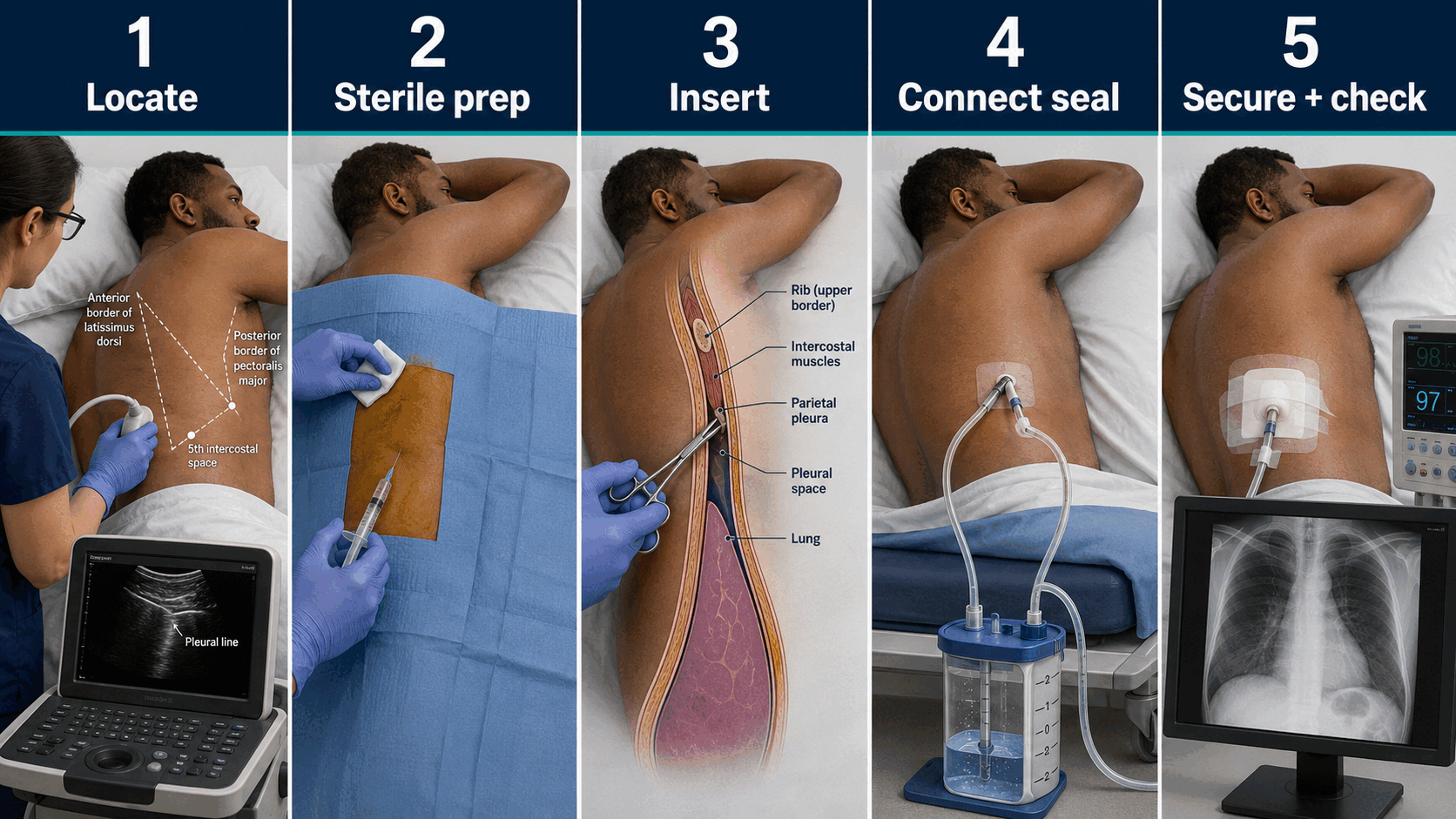
Indications
- Pneumothorax requiring drainage after the emergency decompression decision
- Pleural infection, haemothorax or selected symptomatic effusion
- Post-procedure/surgical pleural drainage under the relevant pathway
Stop / escalate
- Tension pneumothorax is a clinical emergency—decompress immediately; do not wait for imaging or a drain kit
- No safe ultrasound window, uncorrected major bleeding risk or uncertain anatomy
- Do not insert below the safe triangle or use a trocar technique outside specialist protocols
Illustrated step sequence
Samples / technical essentials
- Pleural pH in a heparinised blood-gas syringe without air/local anaesthetic contamination
- Protein/LDH with paired serum, glucose, cell differential
- Gram stain/culture including bedside blood-culture bottles, cytology and targeted tests
Aftercare and complications
- Immediate clinical reassessment; confirm position/complications with imaging according to indication and local policy
- Never clamp a bubbling pneumothorax drain unless a pleural specialist directs it
- Escalate respiratory deterioration, severe pain, bleeding, drain displacement/blockage, surgical emphysema or re-expansion oedema
Supervised clinician education. Use the current local checklist, competency standard, consent policy, infection-control procedure and escalation route. This pathway does not certify procedural competence.