STAND-ALONE BEDSIDE PROCEDURE PATHWAY
Lumbar puncture
Sterile CSF sampling with opening pressure and correctly prioritised tubes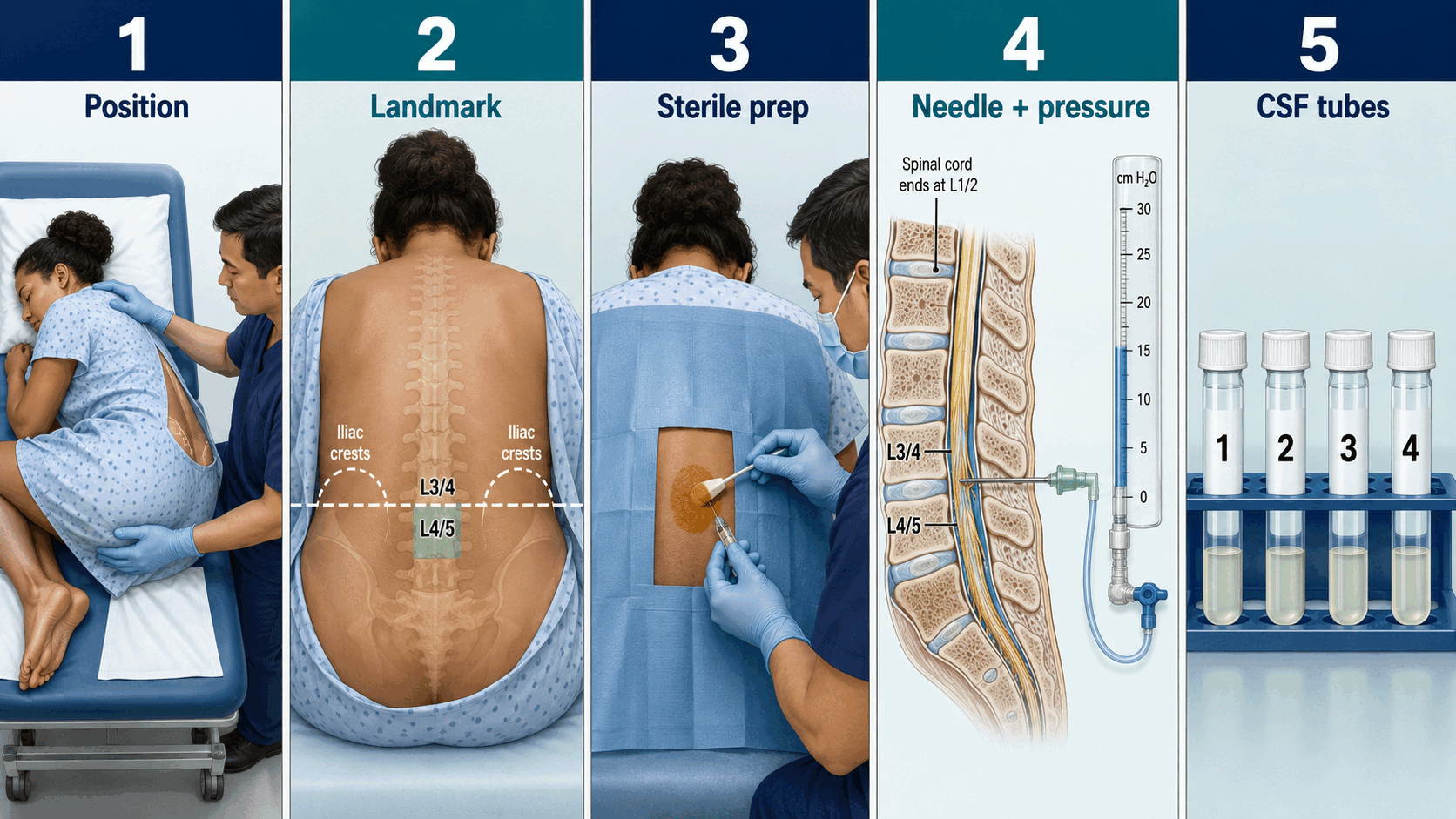
Indications
- Suspected CNS infection/inflammation after time-critical treatment
- Subarachnoid haemorrhage when the pathway requires CSF
- Pressure disorders, malignancy and specialist neurological diagnosis
Stop / escalate
- Mass lesion/obstructive hydrocephalus or clinical herniation risk
- Infection at puncture site, major uncorrected bleeding risk or unsafe anticoagulation
- Cardiorespiratory instability—stabilise first; do not delay antibiotics/aciclovir
Illustrated step sequence
Samples / technical essentials
- Cells/differential, protein and glucose with paired serum glucose
- Gram stain/culture and syndrome-specific PCR
- Xanthochromia, oligoclonal bands with paired serum, cytology/flow or TB/fungal tests only when indicated
Aftercare and complications
- Observe neurology, puncture site and clinical stability
- Post-dural puncture headache: analgesia/hydration advice; anaesthetic review for persistent severe orthostatic headache
- Urgent assessment for new deficit, sphincter disturbance, severe back/radicular pain, fever or bleeding
Supervised clinician education. Use the current local checklist, competency standard, consent policy, infection-control procedure and escalation route. This pathway does not certify procedural competence.